
My students have been studying the human body, and recently we have been learning about internal vs. external body parts. I love teaching this topic because it always sparks so much curiosity and excitement in my classroom. Young children are naturally fascinated by how their bodies work, and exploring what’s happening beneath their skin really captures their attention.
Teaching about internal vs. external body parts is a great way to help children build foundational knowledge about health and science. While this lesson isn’t necessarily part of our state standards, I like to include it as part of our kindergarten science curriculum. Giving students a better understanding of what’s inside their bodies — and how to take care of both internal and external parts — lays the groundwork for healthy habits and self-awareness as they grow.
It’s also an excellent lesson to include during Red Ribbon Week when we discuss the dangers of drugs, alcohol, and other substances that can harm the body. Students are often shocked to learn how things like cigarettes or alcohol can damage their internal organs. That connection helps them understand why it’s so important to make healthy choices to protect not just what they can see on the outside but also what’s inside.
Introducing Internal vs. External Body Parts
I like to start our unit with a read-aloud of the book Me and My Amazing Body by Joan Sweeney. This book is perfect for introducing young learners to the concepts of internal and external body parts. The language is clear, and the illustrations make it easy for children to visualize where their organs are and what they do. If you’d like to grab a copy of the book for your own classroom, you can find it through my affiliate link below.

After reading, we move on to a whole-class discussion about what we learned. I usually draw a large outline of a child’s body on chart paper and invite students to come up and label parts. We talk about which parts we can see and touch — like our eyes, ears, skin, and hair — and which parts are hidden inside, like our lungs, heart, and stomach.
This is a good time to introduce vocabulary words like organs, muscles, and skeleton. Even though the words are big, kindergartners love using “grown-up” words and learning what they mean. I also emphasize how both internal and external body parts work together to keep us alive, healthy, and able to move and play.
Sorting and Assessment
Once students have a general idea of what’s inside versus outside, we complete a whole-class sorting activity. I give them picture cards of different body parts, and as a group, we decide whether each one is internal or external. This visual and hands-on activity helps students make the distinction and reinforces their understanding.

After we finish the sort, I give students an individual assessment page to complete. It’s a simple check for understanding where they sort a few more body parts into internal or external categories on paper. This makes it easy for me to see which students need more support and which ones have grasped the concept.

If you’d like to use my free sorting activity and assessment page with your own students, you can download it here:
Extending the Lesson
If you want to extend the lesson, you can have students draw and label their own diagrams of the human body, showing some internal and external parts. Another idea is to create a “Body Parts Book” where each page features one body part, its name, whether it’s internal or external, and what it does.
You can also tie this lesson into discussions about hygiene and self-care. Talk about how we keep external parts like our skin and teeth clean, and how eating healthy foods and exercising keep internal parts like our heart and lungs strong.
More Resources
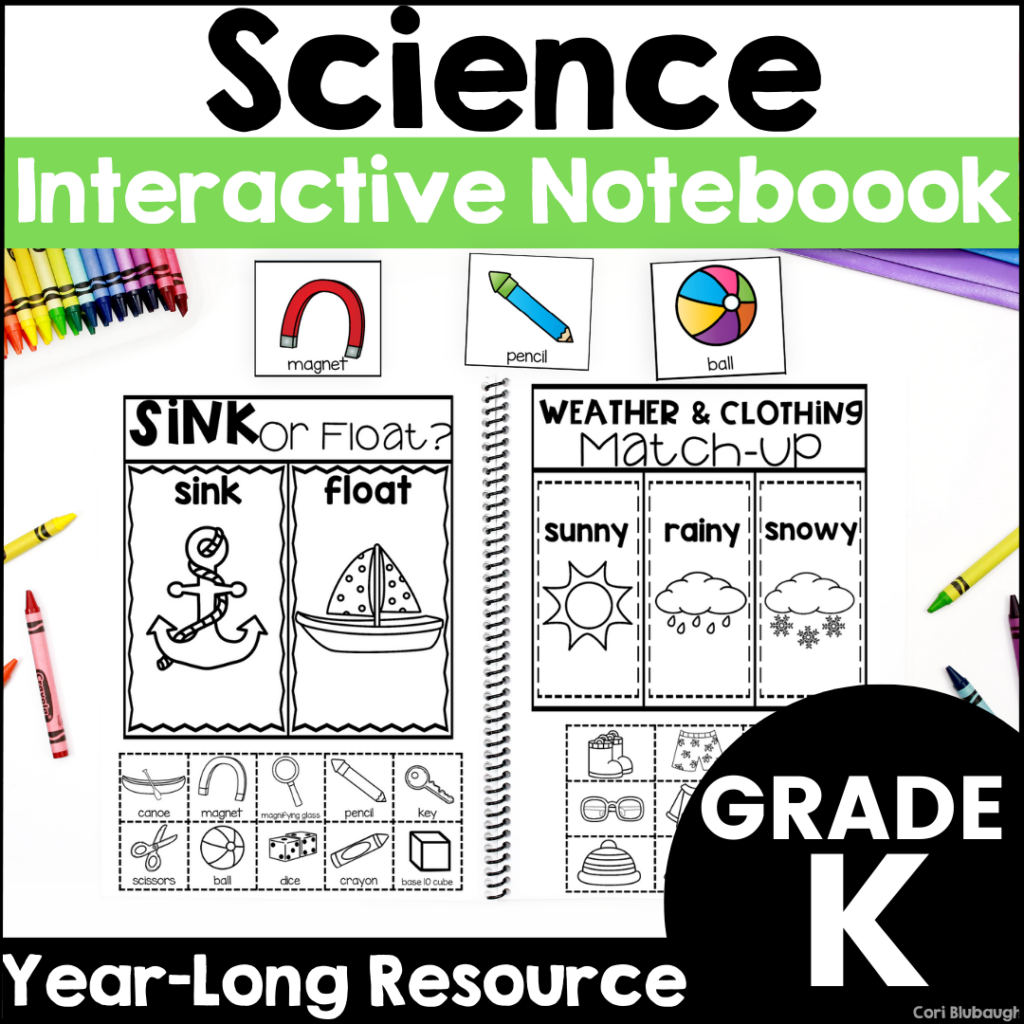
If you enjoyed this activity, you might also like my science notebook resource, which includes even more hands-on, engaging science activities for young learners.
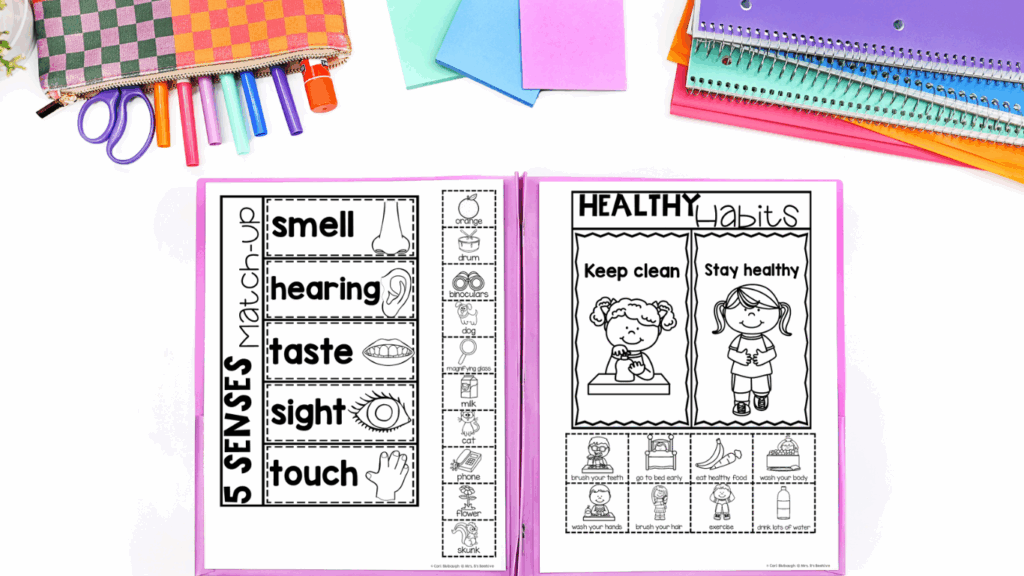
I’ve also put together an extensive list of the best science books for kindergarten, covering a wide variety of topics — from animals and weather to space and the human body. These books are a wonderful way to keep students engaged and learning about the world around them.
Teaching students about internal vs. external body parts is one of my favorite ways to spark curiosity about how amazing our bodies really are. It’s a lesson that not only teaches them about science but also helps them develop an appreciation for staying healthy and taking care of themselves — inside and out!