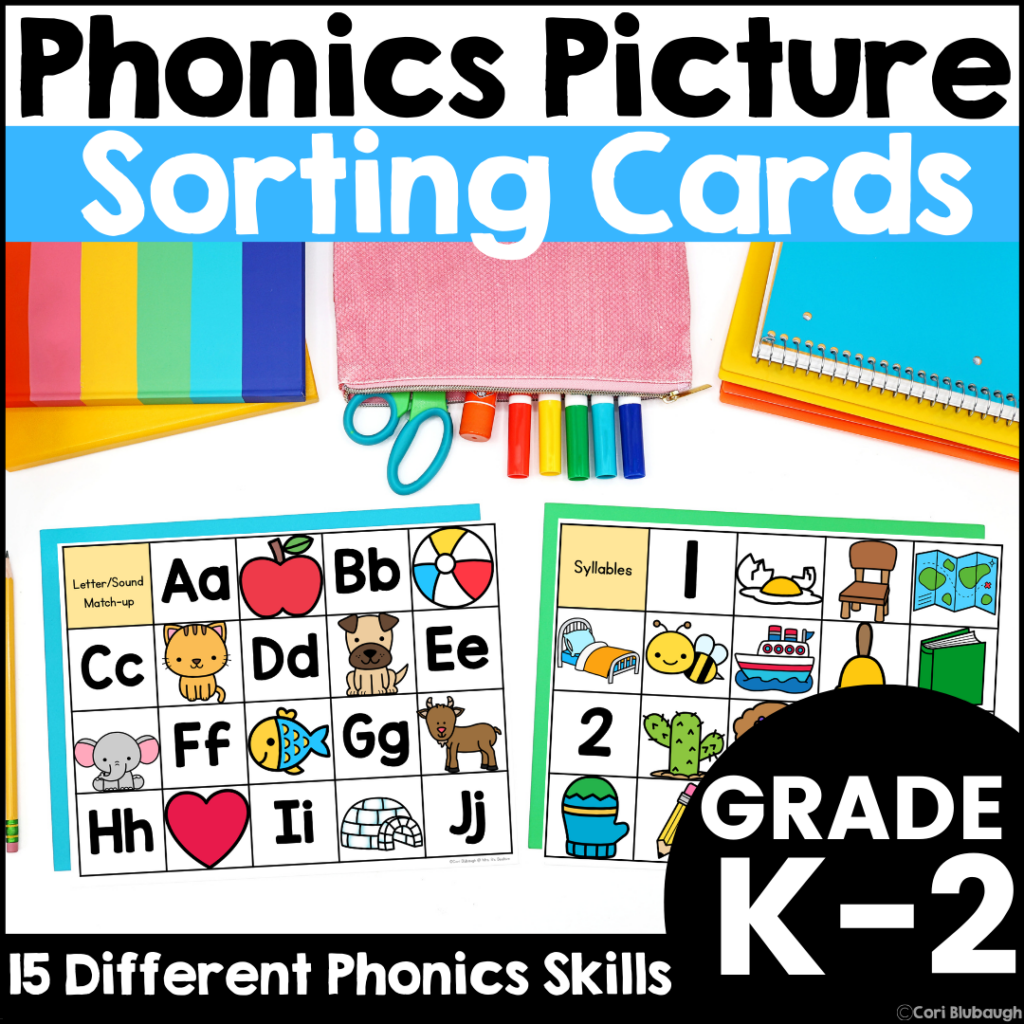
When it comes to building strong foundational reading skills in kindergarten and first grade, few activities are as versatile and effective as a guided reading sort. These hands-on activities use picture cards to help students practice key phonics skills—such as beginning sounds, ending sounds, CVC words, and beginning blends—while also strengthening their oral language and vocabulary.
In my classroom, guided reading sorts are one of my favorite small group activities because they are quick to prep, easy to differentiate, and highly engaging for students. Whether I’m working on early alphabet recognition or challenging my students with tricky consonant blends, a guided reading sort gives them the opportunity to practice skills in an active, tactile way that leads to better reading and writing success.
Today, I want to share with you exactly how I organize my guided reading sorts and how I use them during small group instruction. Over the years, I’ve tried several systems, but I’ve finally found one that is affordable, organized, and keeps my materials clean and easy to access.
Why Guided Reading Sorts Work
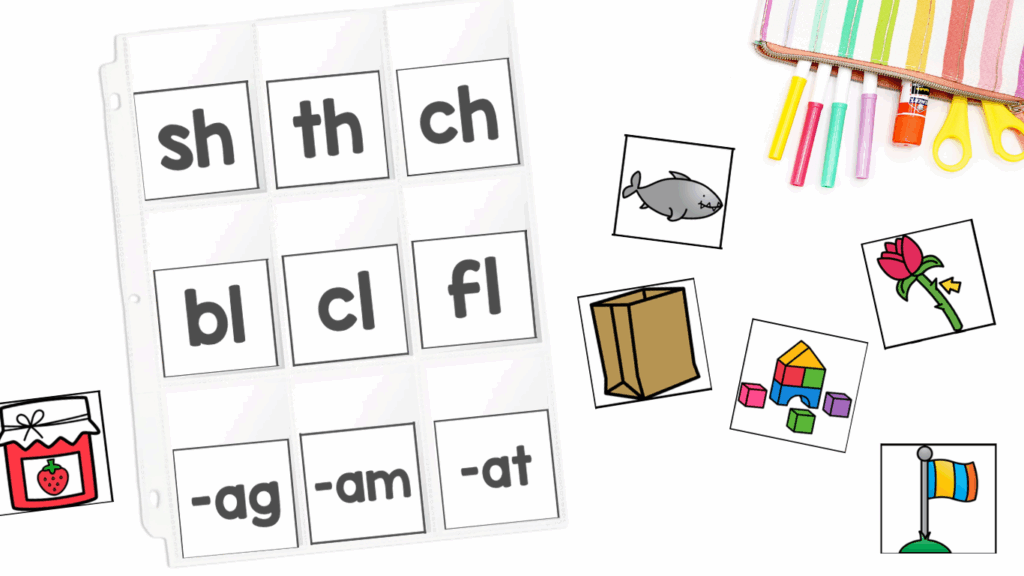
A guided reading sort is essentially a collection of picture cards that students look at, identify, and sort according to a phonics rule or skill. For example, you might give students a set of cards with pictures like “cat,” “bat,” “sun,” and “fun” to help them sort based on word families or ending sounds. Other sorts may focus on beginning blends, vowel sounds, or tricky digraphs.
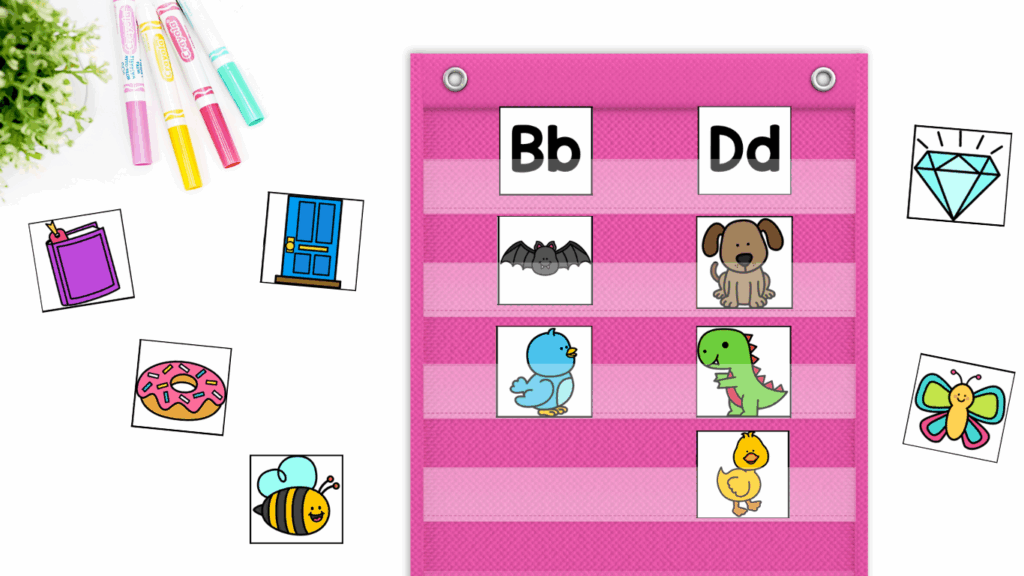
This approach works so well because it taps into multiple learning modalities:
- Visual learners can see the picture and connect it to the sound.
- Auditory learners can say the word aloud and hear the sound pattern.
- Kinesthetic learners can physically manipulate the cards into groups.
By combining these strategies, students retain the phonics concepts more effectively, which leads to better decoding skills and improved reading fluency over time.
My Favorite Way to Organize Guided Reading Sorts
After experimenting with binders, boxes, and even zip-top bags, I finally landed on a system that keeps my guided reading sort materials tidy, durable, and easy to grab during small groups—baseball card holders.
I purchased these inexpensive yet sturdy baseball card sleeves from Amazon. Each sleeve has multiple pockets, making them perfect for storing sets of small picture cards.
Here’s how I set it up:
- Print and Prepare the Sorts – I printed my guided reading sorts pack and enlisted the help of some amazing parent volunteers to cut out all the cards.
- Organize by Level – I arranged the sorts in order from easiest to hardest so I can quickly grab the set I need based on the group I’m working with.
- Label Each Sleeve – Each sleeve has a small card on the front with the level, the name of the sort, and an answer key for quick reference. This helps me (and any substitute teachers) instantly know what’s inside.
- Use Additional Labels for Clarity – I used my label maker and some alphabet stickers from the Target dollar spot to make the skill focus for each sort extra clear.
The end result is a compact binder full of guided reading sorts that I can flip through and pull out in seconds.
How I Use Guided Reading Sorts in Small Groups
During guided reading time, I match the sort to the phonics skill my small group needs to work on. This makes it incredibly easy to differentiate instruction—students who are still mastering beginning sounds can work with simpler sorts, while students ready for blends or vowel teams can work on more challenging sets.
Here are a few ways I use the sorts:
- Warm-Up Activity – I often start small groups with a quick guided reading sort to activate phonics knowledge before we read.
- Targeted Skill Practice – If I notice a group is struggling with a particular sound, I’ll pull that sort and spend focused time on it.
- Independent Center Work – Because the cards are self-contained and labeled, students can also use them independently during literacy centers.
- Assessment Tool – I watch students complete the sort to check for understanding and identify where more instruction is needed.
Why Teachers Love This Resource
Teachers love using guided reading sorts because it’s flexible, portable, and requires very little prep once it’s organized. Students, on the other hand, love it because it feels like a game. They get to talk, move pieces around, and show off their growing knowledge.
Since implementing this system, my guided reading time runs more smoothly, I’m more prepared, and my students are showing measurable growth in their reading and writing skills. And the best part? Once the sorts are prepped and organized, you can use them year after year.
If you’ve been looking for a way to make your small group reading time more engaging, efficient, and effective, I highly recommend setting up your own guided reading sort system. A little organization up front will save you time every day—and your students will reap the benefits in their reading progress.