

If you’re looking for a fun and engaging Easter activity that builds reading comprehension and writing skills at the same time, I have the perfect book and companion idea to share with you!
Have you read The Easter Bunny’s Assistant? If not, you are in for a treat. This hilarious story quickly became one of my students’ all-time favorites, and not just during Easter season!
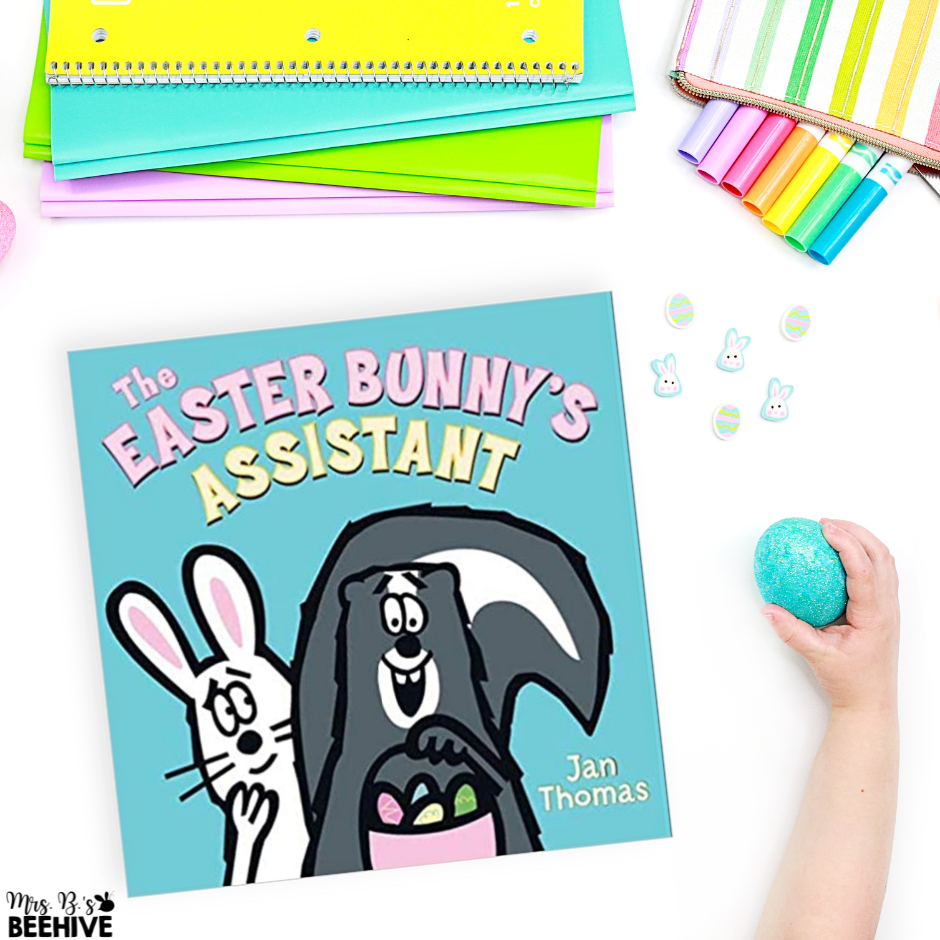
The Easter Bunny’s Assistant by Jan Thomas is about a skunk who desperately wants to help the Easter Bunny dye eggs. His enthusiasm is adorable… but if you know anything about skunks, you can probably predict what might go wrong! The humor is spot-on for kindergarteners, and the storyline is simple enough for young learners to follow while still being laugh-out-loud funny.
My students LOVED this book. In fact, they begged me to read it long after Easter was over. That’s when you know you’ve found a good one!
Jan Thomas has a special gift for writing books that are developmentally appropriate for kindergarten. The illustrations are crisp and clear, making them easy for students to interpret. The text contains many high-frequency sight words and repetitive sentence patterns, which is exactly what early readers need.
Because of the predictable text structure, my students begin “reading” these books on their own very quickly. They memorize patterns, recognize sight words, and build confidence. The humor keeps them engaged, and that engagement fuels their desire to read independently.
If you enjoy this book as an Easter activity, you might also love some of these other favorites by Jan Thomas:
- Rhyming Dust Bunnies
- Here Comes the Big Mean Dust Bunny
- The Doghouse
- What Will Fat Cat Sit On
- My Toothbrush is Missing
- The Chicken Who Couldn’t
They have a similar feel, bold illustrations, simple text, and lots of humor, making them perfect additions to your classroom library.
Turning This Book into a Meaningful Easter Activity
Lately, I’ve been in a sequencing mood, and this story lends itself beautifully to sequencing practice. Throughout the book, the Easter Bunny explains step-by-step how to dye Easter eggs. That natural progression makes it an ideal springboard for a literacy-based Easter activity.
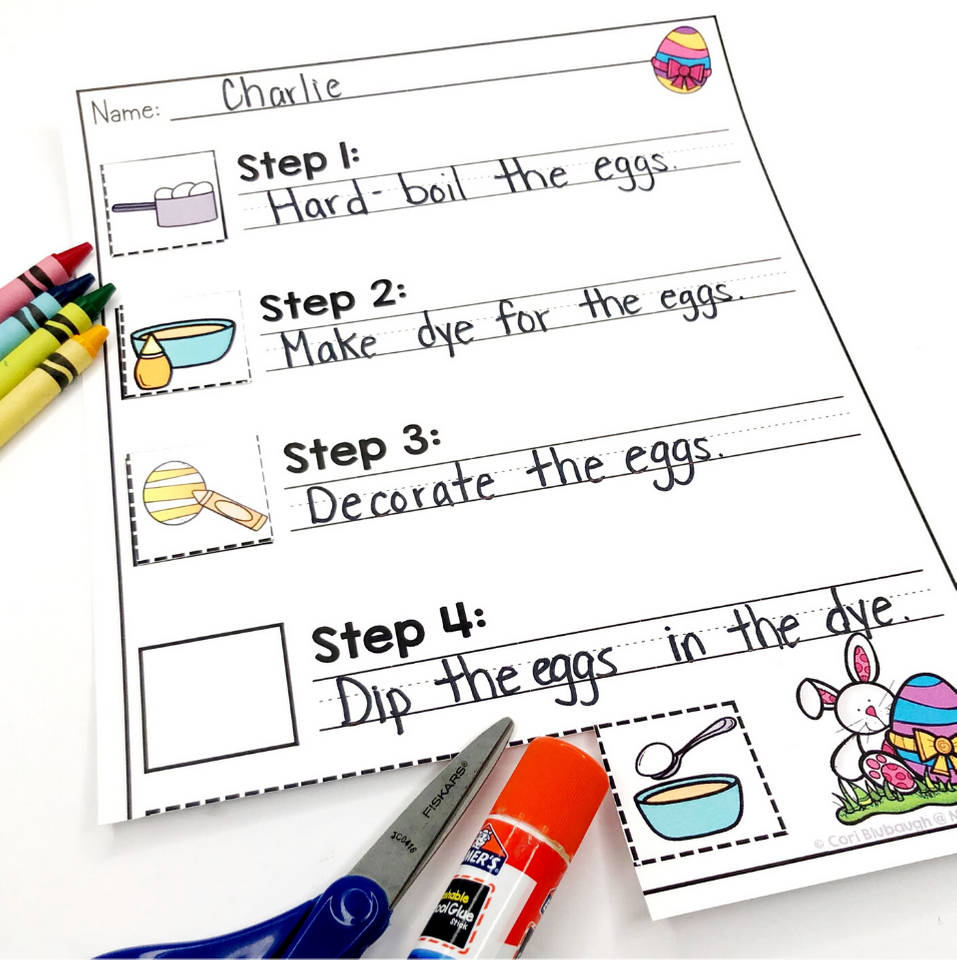
After reading the story aloud (and probably laughing a lot), we dive into sequencing. I created a simple sequencing freebie that follows the book’s main events. Students cut, order, and glue pictures to show what happened first, next, then, and last. This helps reinforce:
- Story structure
- Beginning, middle, and end
- Cause and effect
- Listening comprehension
But I didn’t stop there. I wanted to extend this Easter activity into writing practice as well.
Adding Writing to Your Easter Activity
The resource also includes sentence-writing practice connected to the sequencing pictures. Students write simple sentences describing each step of dyeing the eggs. This gives them structured writing support while reinforcing what they learned from the text.
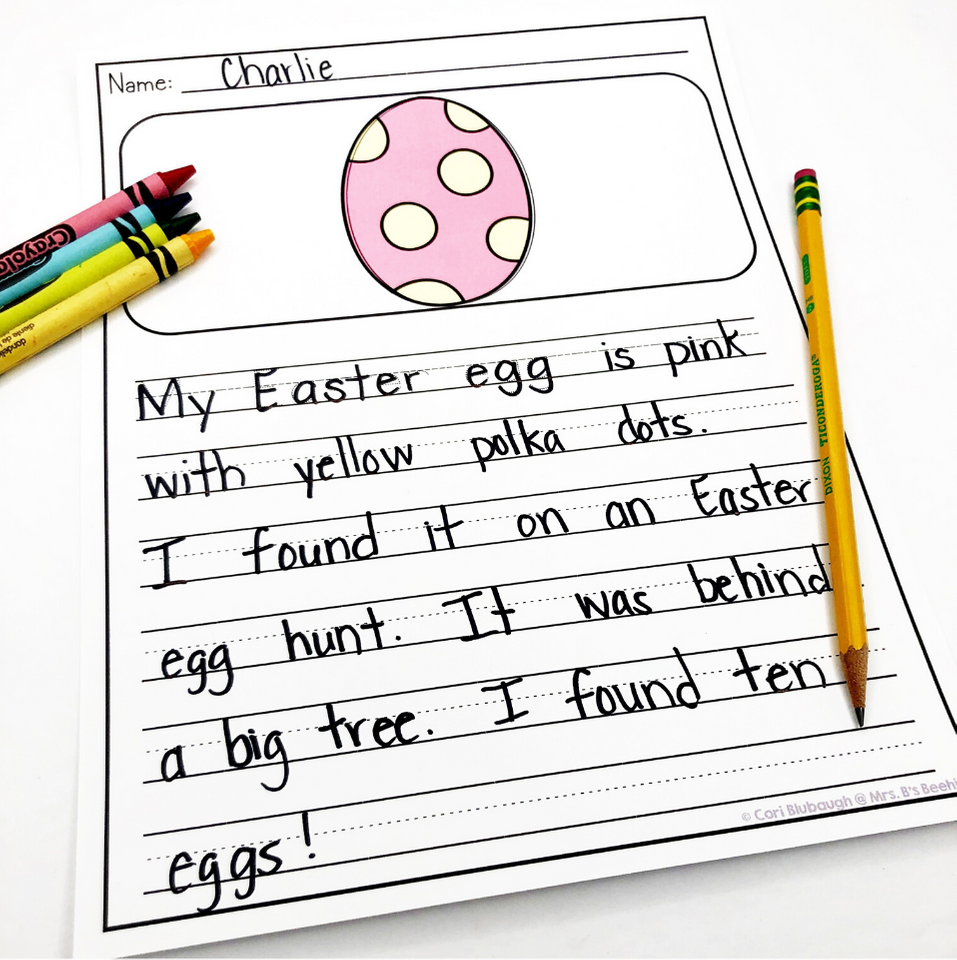
Additionally, I included a blank Easter egg page that opens the door to multiple writing possibilities. You can easily differentiate based on your classroom goals.
Here are a few ways you could use it:
1. Adjective Practice
Students decorate their egg and describe it using the five senses.
- What does it look like?
- What colors do you see?
- How does it feel?
This is a wonderful way to introduce descriptive writing in a fun and seasonal way.
2. Narrative Storytelling
Students can write about:
- An Easter egg hunt
- Dyeing eggs in class
- A silly adventure with the Easter Bunny
This type of Easter activity encourages creativity and helps students practice writing complete sentences.
3. Procedural Writing
Since the book models step-by-step instructions, you can guide students in writing how their egg was made. This introduces procedural writing in a very accessible format:
- First, we…
- Next, we…
- Then, we…
- Finally, we…
Even at the kindergarten level, students can begin to understand that writing can explain how to do something.
Making It Even More Meaningful
This Easter activity pairs perfectly with hands-on experiences. If you dye eggs in the classroom, students can write about the real process. If you host an Easter egg hunt, they can sequence the events afterward.
When literacy connects to real experiences, comprehension deepens. Students aren’t just completing a worksheet; they’re writing about something they lived.
Why This Easter Activity Works So Well
This simple book-based Easter activity checks so many boxes:
- Engaging read-aloud
- Sight word exposure
- Repetitive text for fluency
- Sequencing practice
- Sentence writing
- Creative expression
- Procedural writing introduction
And most importantly, it’s fun.
If you’d like a free copy of this sequencing and writing resource to use with The Easter Bunny’s Assistant, just fill out the information below.
Looking for even more spring-themed literacy and writing ideas? Be sure to check out my other spring activities and writing resources to keep your students learning (and laughing!) all season long.


