
In these crazy, unpredictable times, sometimes the very best thing we can do is step outside and take a nature walk. Fresh air, sunshine, and a change of scenery can do wonders for both kids and adults. My husband and I started taking daily walks around our neighborhood, and I quickly realized how much those simple outings helped lower stress and bring a sense of calm to our day.
A neighborhood nature walk offers something powerful: connection. Connection to fresh air. Connection to the outdoors. And most importantly, a connection to each other.
As I began seeing more families walking together in our neighborhood, it made me smile. Parents are doing everything they can to create meaningful and enriching experiences at home. With that in mind, I created a simple, educational nature walk resource that can easily be given to families and used right in their own neighborhoods.
Neighborhood Nature Walk Learning
A nature walk doesn’t have to be complicated to be meaningful. You don’t need to live near a forest preserve or hiking trail. Sidewalks, cul-de-sacs, apartment complexes, and local parks all provide opportunities for observation and learning.
The goal of this resource is to turn an ordinary nature walk into an engaging cross-curricular experience that reinforces math, writing, and science skills in a natural (and fun!) way.
All students need is:
- A clipboard
- A pencil
- The printed recording sheets
That’s it!
Practice Key Math Skills on a Nature Walk
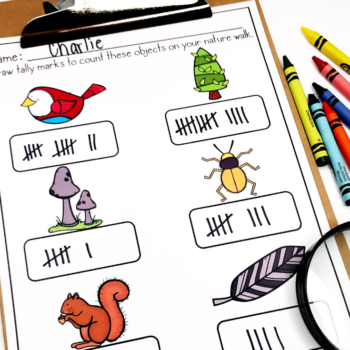
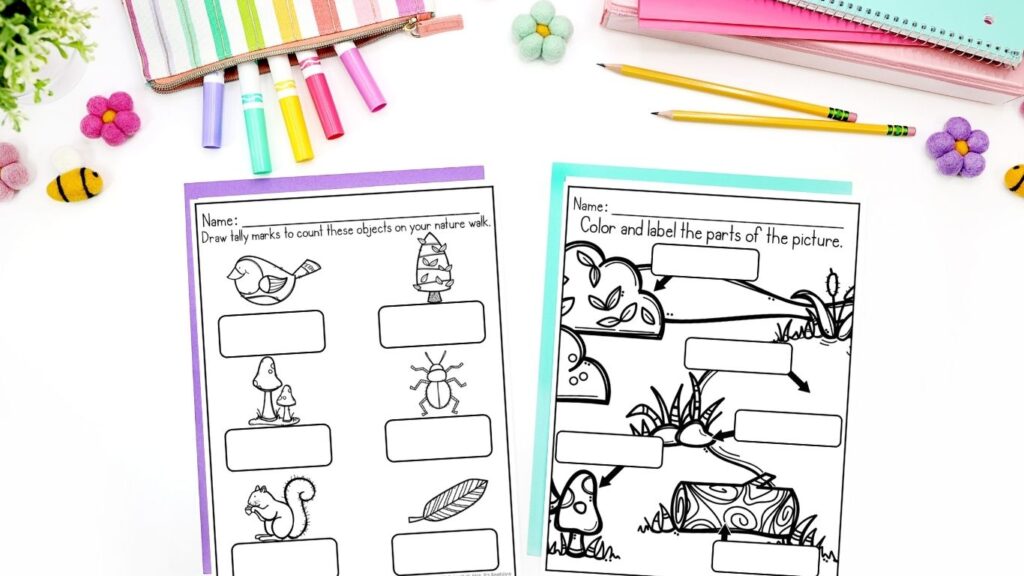
The first page of the resource focuses on counting and tally marks. As students go on their nature walk, they record common objects they see, things like trees, birds, flowers, stop signs, cars, or dogs. I intentionally chose items that are likely to be found in most neighborhoods across the country, so the activity is accessible no matter where families live.
As children spot an object, they add a tally mark. This simple task reinforces:
- One-to-one correspondence
- Counting skills
- Number recognition
- Data collection
It’s amazing how much more engaged students are when math is connected to something real.
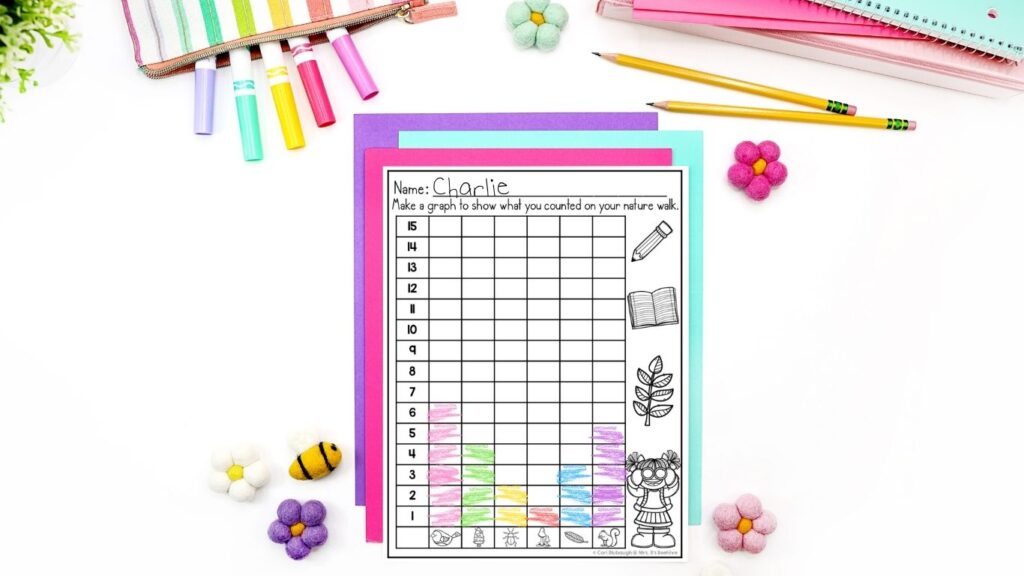
After completing the tally sheet, students move on to a graphing activity. They take their tally totals and create a simple bar graph. This provides valuable practice with:
- Organizing data
- Comparing quantities
- Identifying “most” and “least.”
- Visual representation of numbers
By incorporating graphing into a nature walk, students are practicing grade-level standards without even realizing it. It feels like an adventure, not a worksheet.
Strengthen Writing Skills Through Observation
In addition to math, this nature walk resource includes literacy components that encourage students to slow down and truly observe their surroundings.
One page features a labeling activity. Students color a nature-themed picture and then label objects they see, sounding out the words independently. This builds:
- Phonemic awareness
- Letter-sound correspondence
- Vocabulary development
- Confidence in invented spelling
Labeling is one of the most developmentally appropriate writing tasks for early learners. It feels manageable while still promoting independence.
The final page is a simple writing prompt where students record a short summary of their nature walk. They can write about:
- What they saw
- Who they walked with
- How they felt
- Something surprising they noticed
Even just two or three sentences provide meaningful writing practice. For emerging writers, you can encourage a sentence frame such as:
“On my nature walk, I saw ______.”
“My favorite part was ______.”
This type of reflective writing strengthens comprehension, sequencing, and personal narrative skills.
Add Reading to Your Nature Walk
If you’d like to extend the experience even further, consider pairing your nature walk with a themed read-aloud. Bringing a book outside or reading it before your walk helps students make connections between literature and the real world.
Here are a few wonderful options:
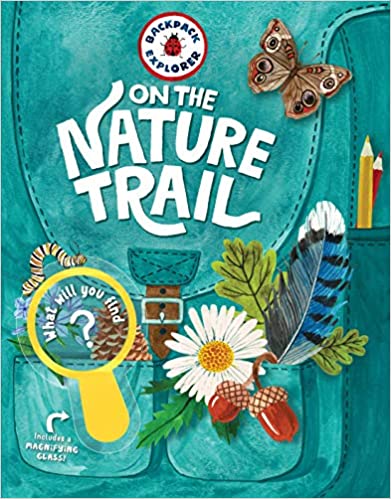


These books encourage curiosity about the outdoors and inspire children to look a little closer at the world around them.
Why a Nature Walk Is So Powerful
A nature walk is simple, but it’s also incredibly powerful.
It encourages:
- Mindfulness
- Physical movement
- Family bonding
- Scientific observation
- Cross-curricular learning
Children naturally ask questions when they’re outside:
- Why are some leaves bigger than others?
- Why do birds sit on power lines?
- Why do some flowers grow in shade?
Those questions are the beginning of scientific thinking.
Even a 15-minute nature walk can spark conversations, reduce anxiety, and create lasting memories.
Easy to Share With Families
One of my goals in creating this nature walk resource was to make it easy for teachers to support families at home. You can simply email the PDF to parents, and they can print it whenever it works for them. No complicated setup. No special supplies.
It’s flexible, accessible, and meaningful, which is exactly what families need.
If you’re looking for more spring-themed learning ideas, be sure to explore the additional seasonal resources available on my website.
And if you’d like a free copy of this nature walk resource (that you are absolutely welcome to share with your families), just fill out the information below.
Sometimes the simplest activities, like a nature walk around the block, make the biggest impact.
If you are looking for more spring activities, check out the resources I have on my website!