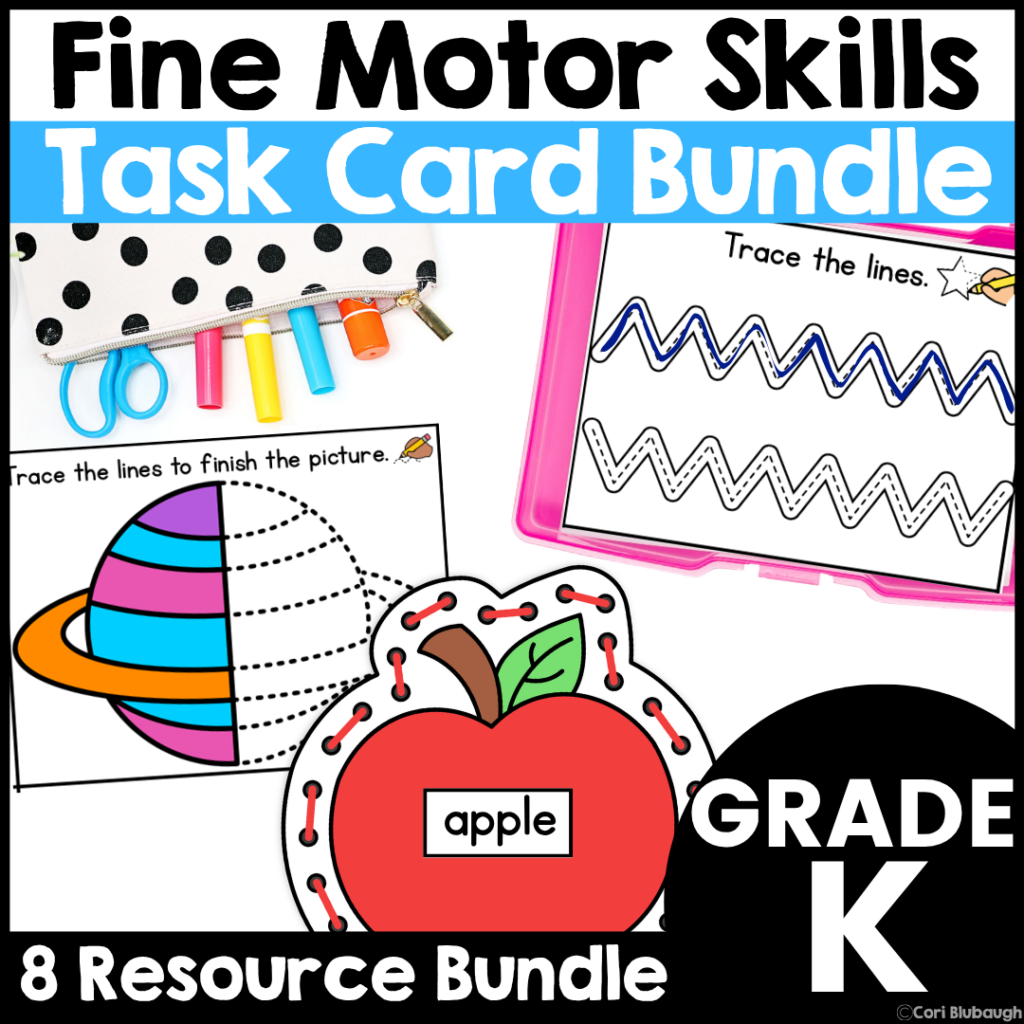
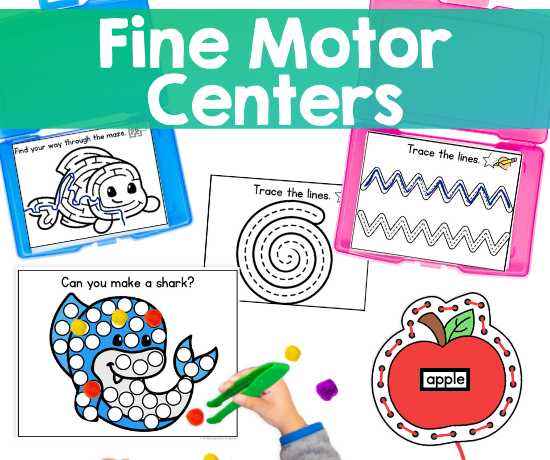
In a perfect world, all students would walk into our classrooms on the first day of school with strong fine motor skills already in place. Ideally, these skills would have been developed at home and in preschool through hands-on play, exploration, and the manipulation of toys and fine motor tools that strengthen small muscles in the hands and fingers. Activities like building with blocks, playing with playdough, coloring, cutting, and stringing beads all help children develop the grip strength and dexterity they need for school tasks.
Unfortunately, this is often not the case. Many students entering pre-k and kindergarten lack the hand strength needed for proper pencil grip, scissor control, and other fine motor tasks. This has become an increasingly common trend in early childhood classrooms, and teachers everywhere are noticing it.
There are many theories about why fine motor skills seem to be weaker than in years past. One of the most widely discussed explanations is the increase in screen time. Many young children now spend a significant amount of time on tablets and handheld devices rather than engaging in hands-on play. While technology has its place, it doesn’t replace the physical manipulation of real objects that helps build hand strength. Additionally, fewer children are spending time outdoors or engaging in open-ended play with building materials, art supplies, and sensory tools.
There is a great article that explores this shift in fine motor development in more depth, titled What Is Happening to Fine Motor Development. It provides helpful insight into the challenges teachers are seeing in classrooms today and reinforces the importance of intentional fine motor practice in the early years.
Because of this growing need, I found myself adding more fine motor activities to my beginning-of-the-year centers every single year. These centers were especially important for students who struggled to hold a pencil correctly, cut with scissors, or manipulate small objects. Over time, I discovered that having a consistent variety of high-quality fine motor tools made a huge difference.
Today, I’m sharing my favorite fine motor tools along with a simple fine motor activity (plus a freebie!) that you can easily incorporate into your beginning-of-the-year centers or use all year long.
Best Fine Motor Tools
Lakeshore
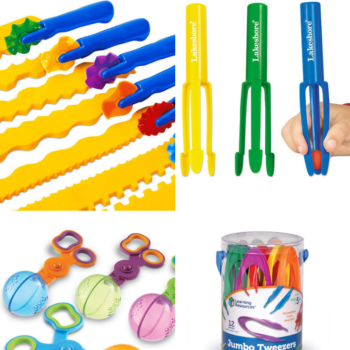
Lakeshore offers a wide variety of durable, classroom-friendly fine motor tools that are perfect for center work. Some of my favorite Lakeshore tools include:


- Tweezer Tongs (Set of 4)
- Easy Squeeze Scoopers (Set of 10)
- Dough Design Wheels (Set of 6)
- Drill Design Kit
Amazon
Amazon is another great place to find a wide range of fine motor tools at different price points. Some of my go-to options include:


- Fine Motor Tool Variety Pack (set of 4)
- Theraputty (5 different strengths)
- Plastic Scoops
- Silicone Tongs (set of 5)
- Scissor Scoopers (set of 4)
- Jumbo Tweezers (You can also find these at the Dollar Tree, sold individually)
Activities
There are so many engaging activities you can create using these tools. One of my favorites uses simple materials you can easily find at the Dollar Tree. I created a quick freebie that pairs perfectly with manipulatives and a muffin tin.
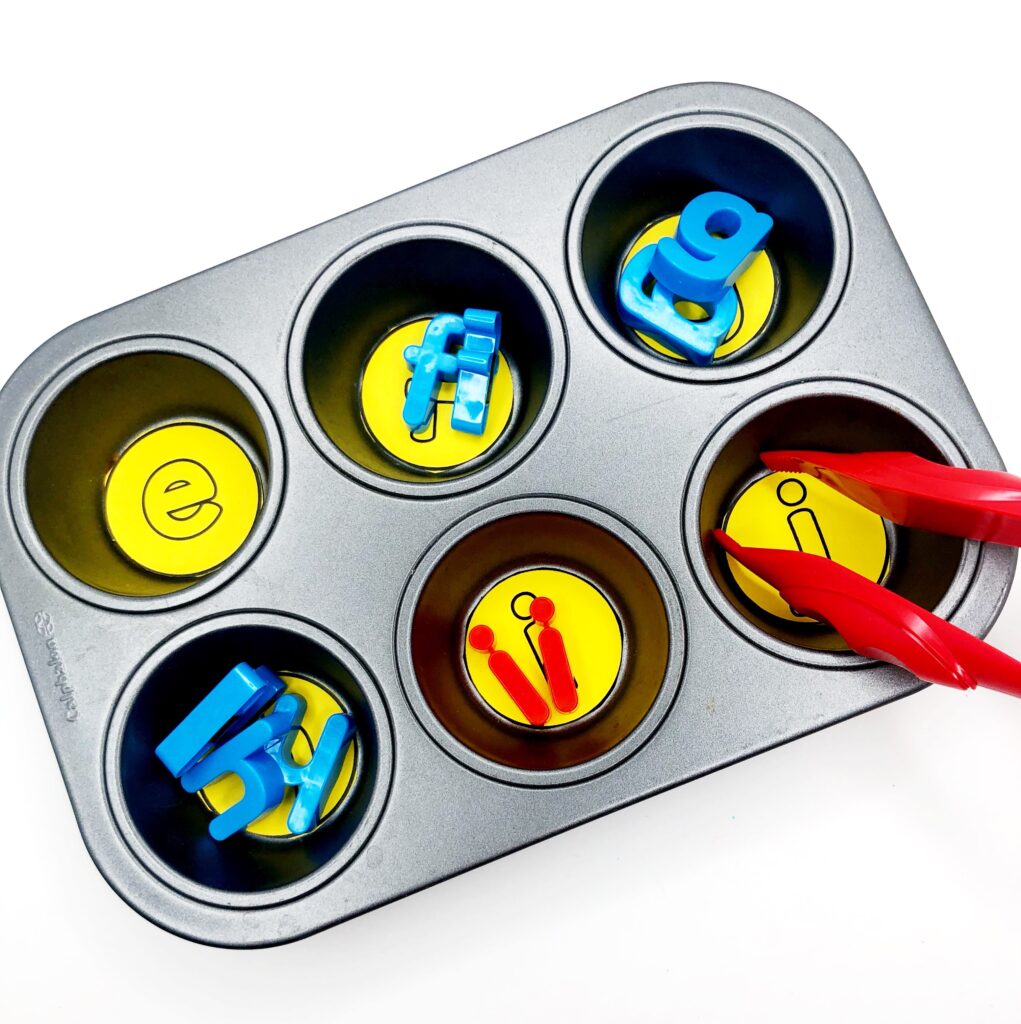
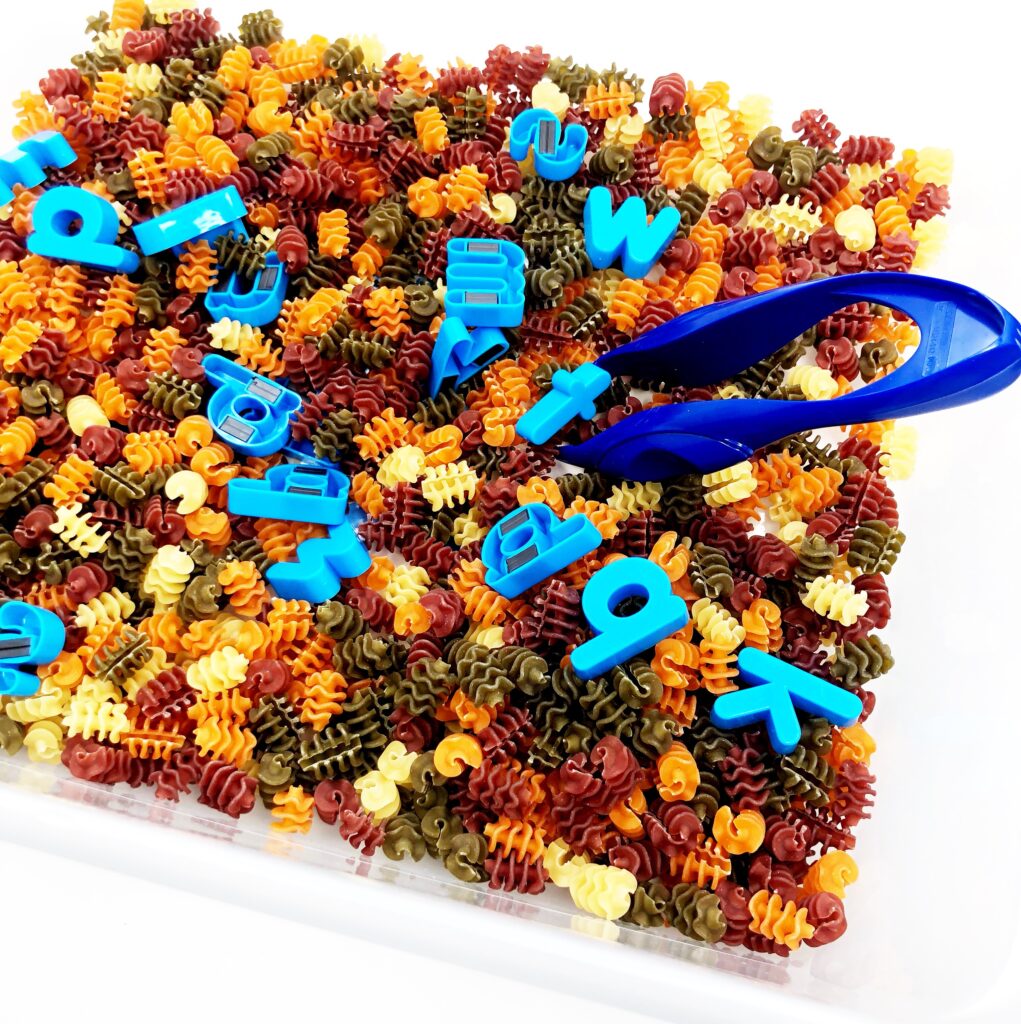
To set up this activity, place magnetic letters, tile letters, or numbers into colored pasta, rice, or another sensory material. Using one of the fine motor tools, students search for the letters or numbers and place them into the correct cup in the muffin tin.
For number practice, you can also include manipulatives such as bear counters. Students identify the number and then add the correct quantity of counters to each cup. This turns a fine motor activity into a meaningful math center as well.
You can grab your free copy of this resource by filling out the information below.
Grab your free copy of this resource. Just fill out the information below!
Fine Motor Academic Activities
One of the easiest ways to fit fine motor practice into your day is by pairing it with academic learning. Throughout the year, I like to keep at least one center that allows students to use fine motor tools while reinforcing literacy or math skills. This makes practice purposeful and keeps students engaged.
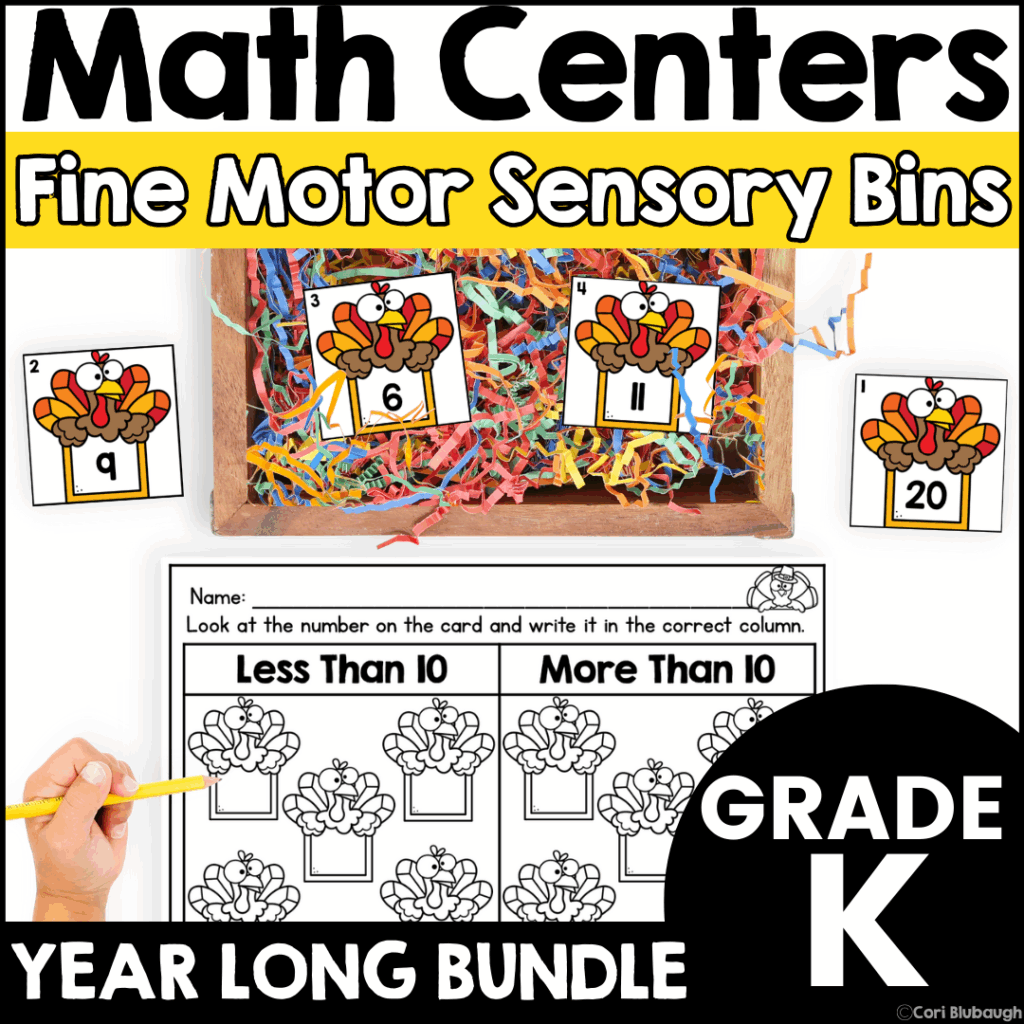
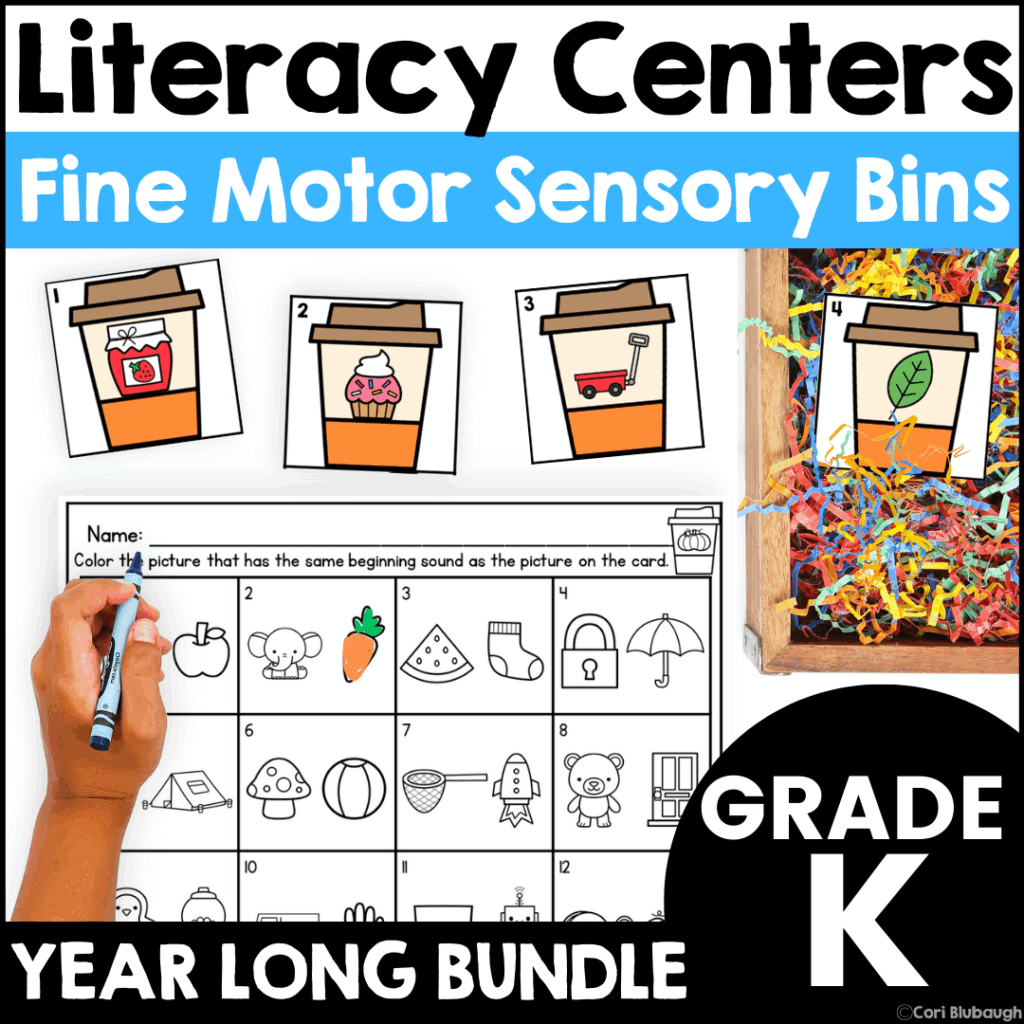
Fine motor tools can be used during letter recognition, number sense, counting, word building, and even simple problem-solving activities. I share more ideas about combining fine motor and academic skills in a linked post, and if you’re interested in ready-made options, my sensory bin literacy and math centers are a great place to start.

You can learn about how I combine fine motor and academic skills in the linked post. If you’d like to check out my sensory bin literacy and math resource, check out some of the resources below.
Sensory Bin Literacy and Math Centers
-
Math Fine Motor Sensory Bin Centers Bundle for Kindergarten
Original price was: $27.00.$19.99Current price is: $19.99. -
Phonics Fine Motor Sensory Bin Center Bundle for Kindergarten
Original price was: $27.00.$19.99Current price is: $19.99. -
Fine Motor Activities Bundle
Original price was: $23.00.$16.10Current price is: $16.10.
If you want to see more activity ideas for gross and fine motor skill activities, check out my Pinterest board:
Check out my other posts that provide additional resources for developing fine motor skills: